
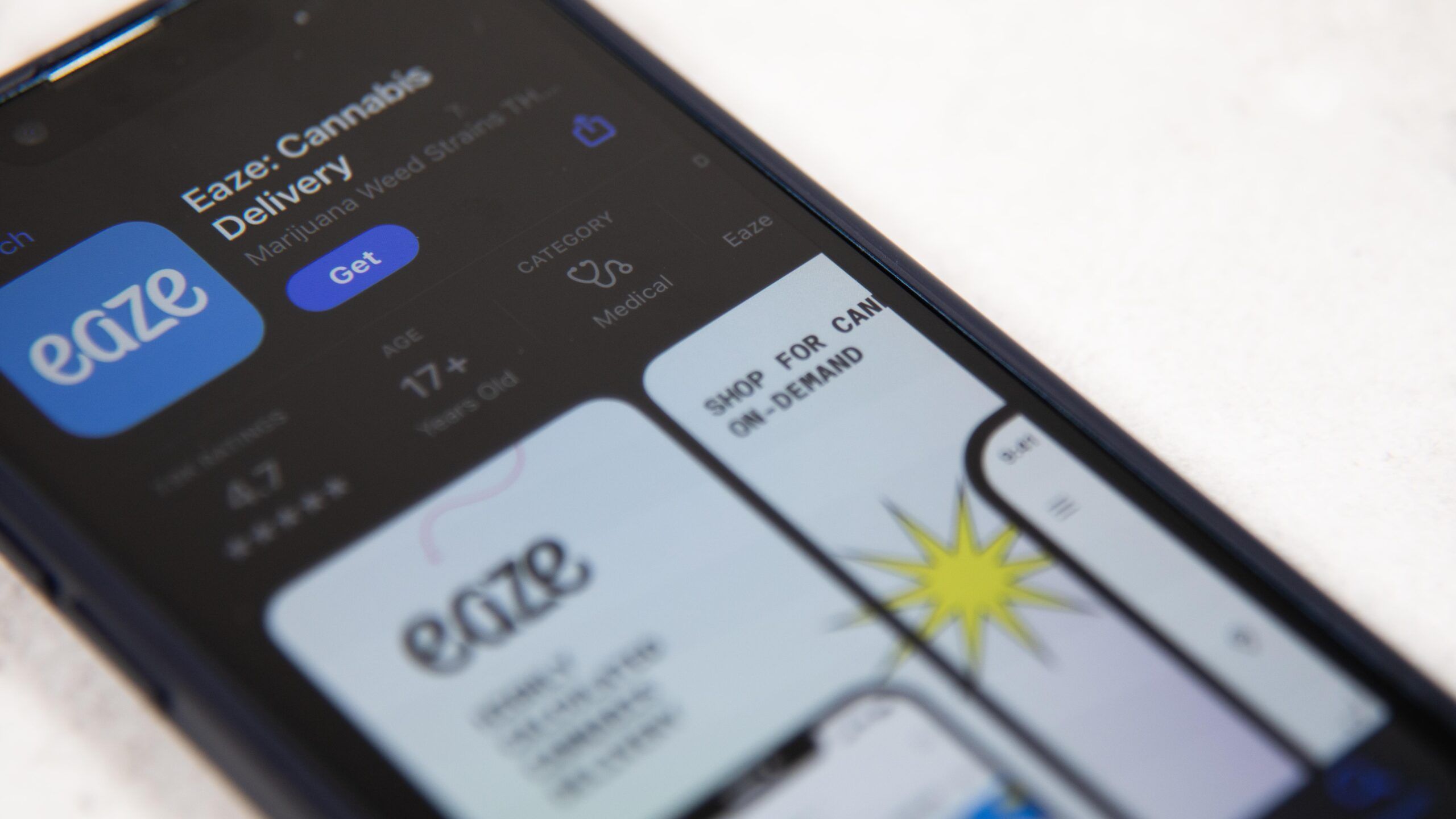
The cannabis delivery sector has seen rapid expansion, high-stakes investment, and intense regulatory pressure — and few companies illustrate the volatility of the space more clearly than Eaze Technologies. Once known as one of the largest marijuana delivery platforms in the United States, the company filed for Chapter 7 bankruptcy in March, marking the end of an era for a brand that helped define the modern cannabis delivery model.
According to BankruptcyObserver, Eaze Technologies entered liquidation shortly after selling and transferring its assets to creditors. The bankruptcy filing followed escalating financial difficulties, operational strain across multiple states, and an increasingly competitive marketplace. Yet, even with the collapse of Eaze Technologies, the Eaze brand itself did not disappear.
In an unusual but strategic move, a new company named simply “Eaze” launched operations on January 1, just one day after the original company shut down. The transition involved rehiring and onboarding roughly 1,100 employees across California, Colorado, and Florida — an aggressive attempt to preserve operations and minimize disruption to consumers, dispensary partners, and drivers.
This two-part story — a high-profile shutdown followed immediately by a large-scale restart — raises complicated questions about the sustainability of cannabis delivery models, the sophistication of restructuring within the legal cannabis industry, and whether this reboot marks a long-term revival or a temporary reprieve.
The Collapse of Eaze Technologies: A Cautionary Tale
Financial Distress Reaches a Breaking Point
Before its March Chapter 7 filing, Eaze Technologies had been showing signs of distress for months. The company faced:
- High operational costs across multiple states
- The ongoing challenge of cannabis banking restrictions
- Shrinking margins as taxes and compliance costs increased
- Intensifying competition from vertically integrated operators offering their own delivery services
Chapter 7 bankruptcy — unlike Chapter 11 restructuring — is a full liquidation, suggesting that the company and its board concluded that ongoing operations were not financially feasible.
BankruptcyObserver reports that Eaze Technologies transferred and sold its remaining assets to secured creditors just before the filing. This likely included:
- Technology platforms
- Consumer data assets
- Licensing rights
- Delivery infrastructure
- Warehousing and inventory systems where applicable
This move reduced creditor losses but left the original company insolvent and unable to continue operations.
December 31: The Shutdown
On December 31, Eaze Technologies officially ceased operations. Employees were notified of the closure, operations were paused, and the company effectively ceased to exist as an employer or service provider.
This could have been the end of the Eaze brand — but the name has strong value in the cannabis market. Recognizing this, stakeholders moved quickly to prevent the brand from disappearing entirely.
January 1: A New Company Called “Eaze” Launches
Just hours after the shutdown, a new company — operating under the same brand name but a legally distinct structure — began operations on January 1.
A massive employee onboarding effort
The new Eaze hired approximately 1,100 employees across three states:
- California — the company’s largest and longest-running market
- Colorado — where Eaze partnered with vertically integrated cannabis companies
- Florida — an expanding delivery market tied to the state’s large medical program
This fast-paced onboarding effort indicates:
- The brand’s operational infrastructure was preserved through the asset transfer.
- New ownership or creditor-controlled leadership wanted continuity, not liquidation of the service.
- The new company intended to minimize disruption for its customers and retail partners.
Strategic reasons for relaunching immediately
The rapid relaunch signals several strategic goals:
- Preserving market share before competitors could fill the gap
- Maintaining customer loyalty through uninterrupted service
- Retaining experienced drivers and employees, which is crucial in a labor-intensive delivery model
- Protecting brand equity associated with the “Eaze” name
- Satisfying creditor interests by continuing to operate a potentially profitable version of the business
In effect, the new company attempted to revive the Eaze brand while shedding the financial burdens of Eaze Technologies.
Why Chapter 7 Instead of Chapter 11?
Many struggling companies opt for Chapter 11 bankruptcy to restructure debt while continuing operations. Eaze Technologies, however, went straight to Chapter 7 liquidation.
Possible reasons include:
1. Debt load too large to restructure
If liabilities significantly exceeded the value of the company’s assets and projected revenue, Chapter 11 would not have been viable.
2. Lack of capital for continued operations
Cannabis companies have limited access to financing due to federal prohibition. Without new investment, Chapter 11 becomes difficult.
3. Pre-packaged transition to new ownership
The asset transfer to creditors before the filing suggests that the brand’s new owners planned an immediate relaunch under a new structure — avoiding the cost and time of restructuring.
4. Regulatory pressures
Cannabis companies operate under state-level licensing rules. A Chapter 7 liquidation allows licenses and delivery infrastructure to be rapidly reassigned.
What This Means for the Cannabis Delivery Sector
Eaze’s collapse and rapid rebirth reflect larger industry pressures:
A. Delivery is expensive — and difficult to scale
Cannabis delivery combines:
- Complex logistics
- High labor costs
- Compliance requirements
- Insurance and fleet expenses
- Payment processing challenges
Even well-funded companies often struggle.
B. Profit margins in cannabis are thin
Traditional retail already faces heavy tax burdens and declining prices. Delivery adds additional cost layers.
C. The industry is consolidating
Creditors taking over assets and relaunching under a new structure is consistent with a broader pattern of consolidation in U.S. cannabis markets.
D. Consumer demand remains strong
The fact that a new Eaze relaunched immediately shows that demand for cannabis delivery — especially in urban markets — remains high.
What Happens Next for the “New Eaze”?
The new Eaze will need to demonstrate it can:
- Operate profitably in multiple states
- Maintain its workforce
- Manage regulatory oversight
- Retain dispensary partners
- Avoid the financial pitfalls that struck Eaze Technologies
While the brand is intact, the company behind the name is entirely new. Its long-term success will depend on its ability to adapt to evolving cannabis regulations, ongoing price compression, and increasing competition from both licensed and illicit delivery operators.
A Fall and Rise
The collapse of Eaze Technologies into Chapter 7 bankruptcy — followed by the almost immediate rise of a successor company — represents one of the most dramatic business transitions in the legal cannabis industry.
One company died on December 31.
Another, bearing the same name and inheriting the same workforce, rose on January 1.
Whether the new Eaze thrives or becomes another casualty of the turbulent cannabis delivery economy remains to be seen. What’s clear is that the brand still carries weight in the industry — and that its new stewards believe it deserves a second chance.